Acne is one of the most common skin problems that affects teenagers and adults alike. It happens when pores get clogged with oil, dead skin cells, bacteria, and dirt. While there are many medical treatments available, you can also manage and reduce acne naturally with a consistent skincare routine and healthy lifestyle changes. Natural methods take time, but they are gentle on the skin and help improve skin health in the long run.
Below is a step-by-step guide to help you reduce acne naturally and safely at home.
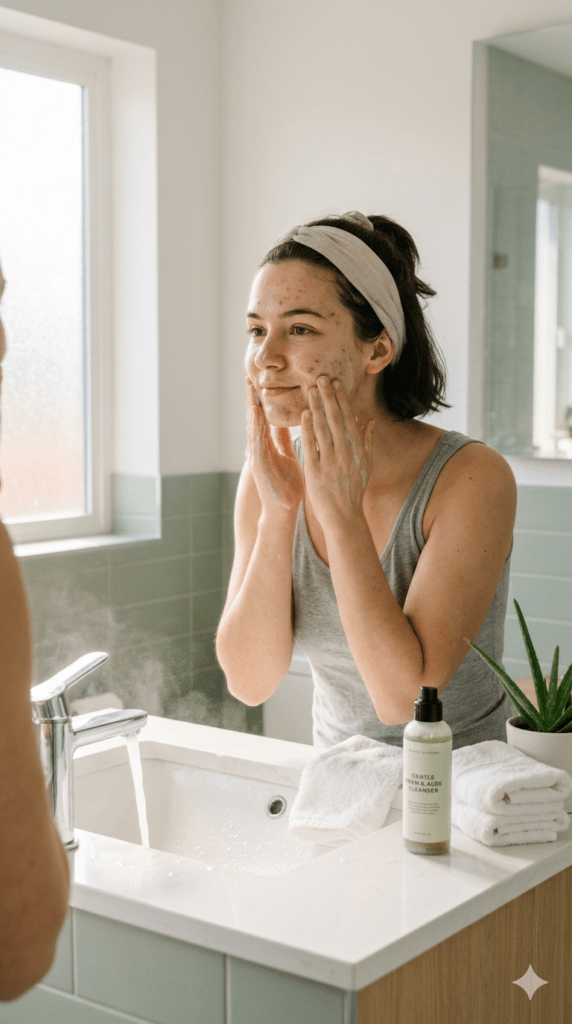
Step 1: Keep Your Face Clean (But Don’t Overwash)
The first and most important step in acne control is maintaining clean skin. Wash your face twice a day—once in the morning and once before going to bed.
Use a gentle, natural cleanser that does not contain harsh chemicals or strong fragrance. Ingredients like neem, tea tree, aloe vera, or green tea are helpful for acne-prone skin.
Avoid overwashing your face because it can strip natural oils and make your skin produce even more oil, which can worsen acne.
After washing, gently pat your skin dry with a clean towel. Do not rub harshly.
Step 2: Use Natural Face Ingredients
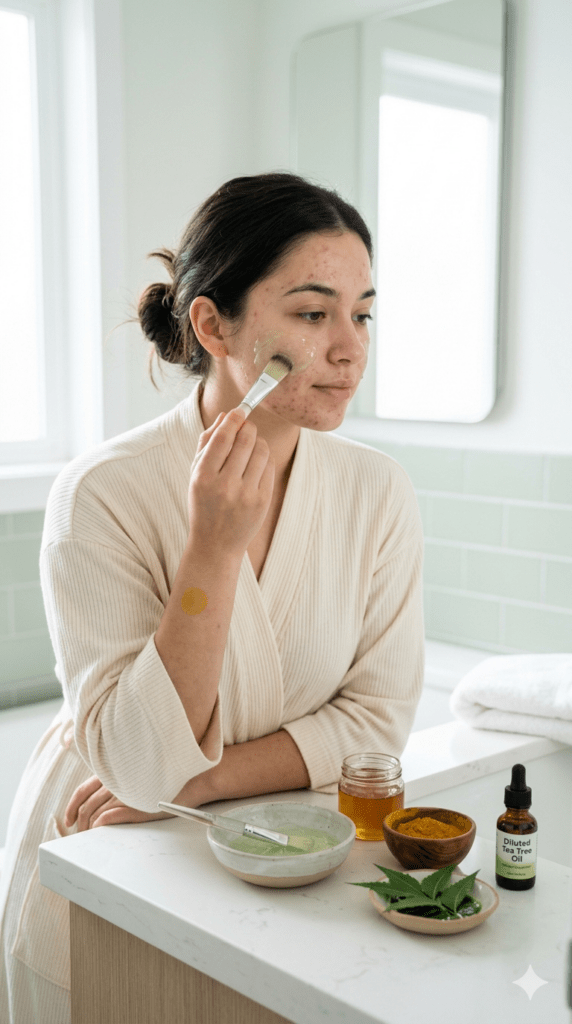
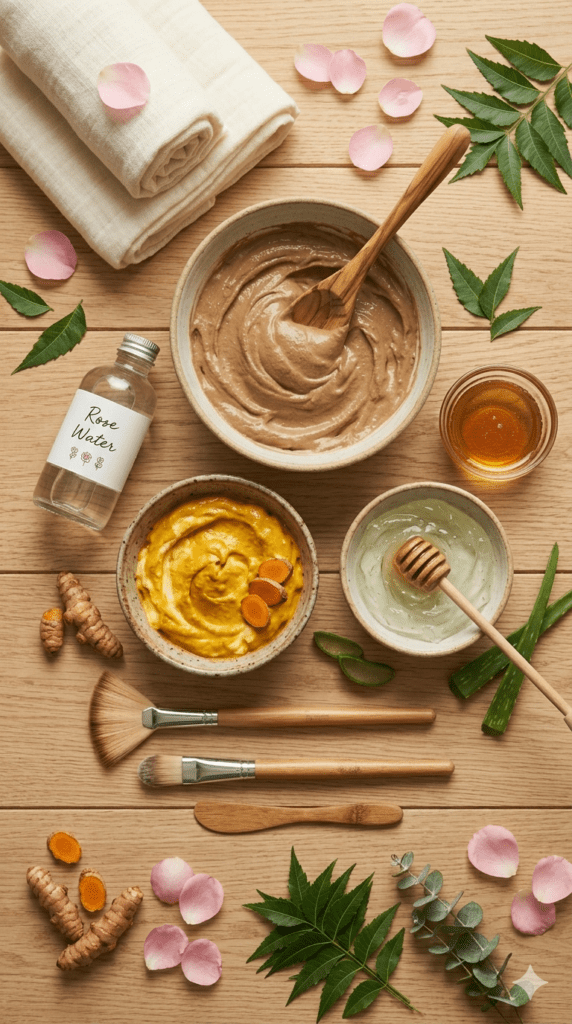
Nature provides many effective acne-fighting ingredients. You can use them as masks or spot treatments:
- Aloe Vera Gel: Soothes inflammation, reduces redness, and heals acne scars.
- Honey: Has antibacterial properties and helps fight acne-causing bacteria.
- Turmeric: Reduces inflammation and helps brighten skin.
- Neem: Known for its strong antibacterial and antifungal properties.
- Tea Tree Oil: Helps kill acne bacteria when diluted properly.
Apply these ingredients 2–3 times a week depending on your skin tolerance. Always do a patch test before applying to your full face.
Step 3: Steam Your Face (1–2 Times a Week)
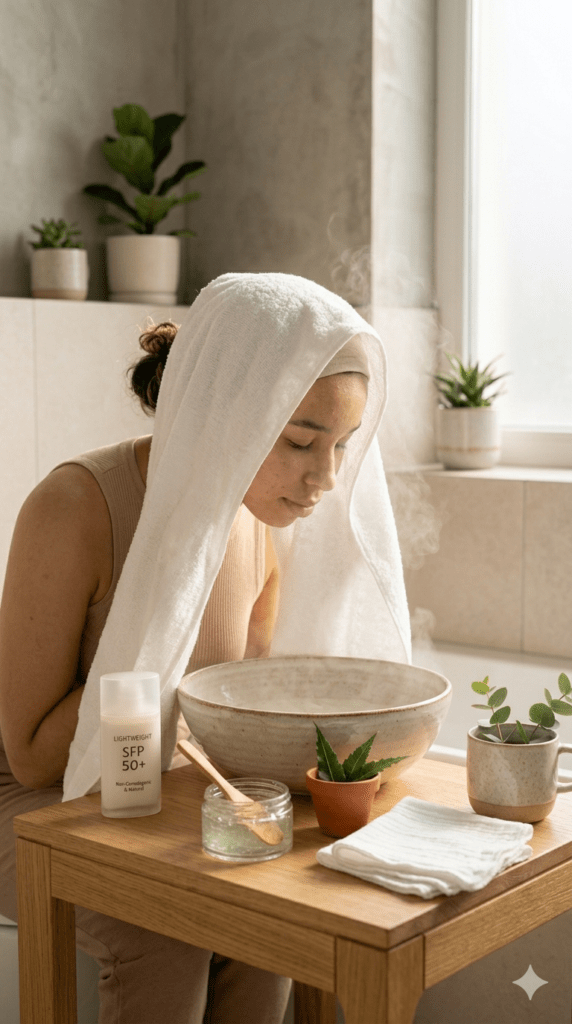
Facial steaming helps open clogged pores and removes dirt, oil, and impurities.
To do this:
Boil water, pour it into a bowl, and place your face above the steam at a safe distance. Cover your head with a towel to trap steam.
Steam for 5–10 minutes, then gently wipe your face with a clean cloth.
After steaming, apply a light natural moisturizer like aloe vera gel.
Do not over-steam, as it can irritate sensitive skin.
Step 4: Exfoliate Gently
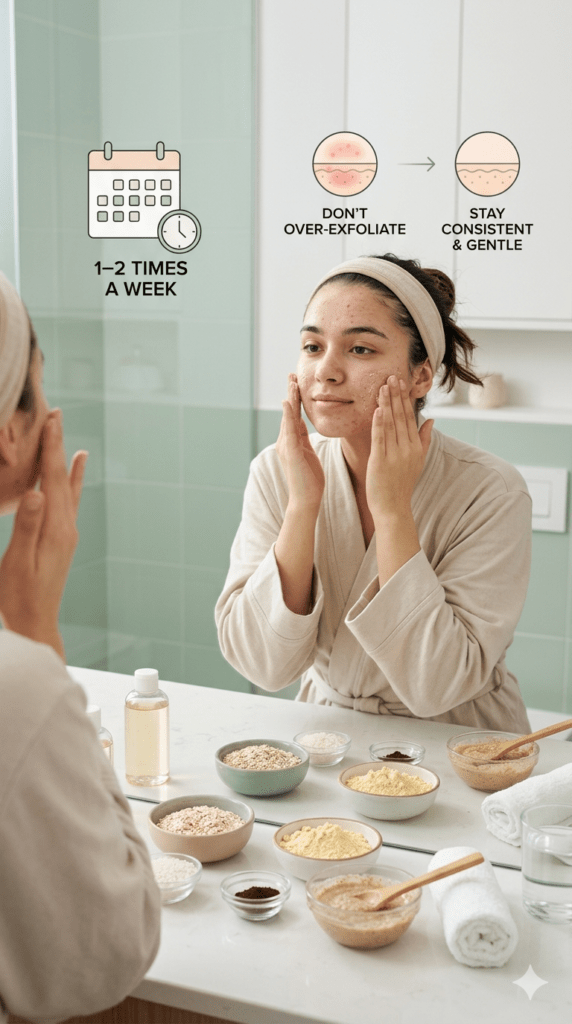
Exfoliation removes dead skin cells that clog pores and cause acne. However, it must be done gently.
Use natural exfoliators like:
- Oatmeal
- Rice powder
- Coffee powder (mild use)
- Besan (gram flour)
Exfoliate only 1–2 times a week. Over-exfoliating can damage skin and increase acne.
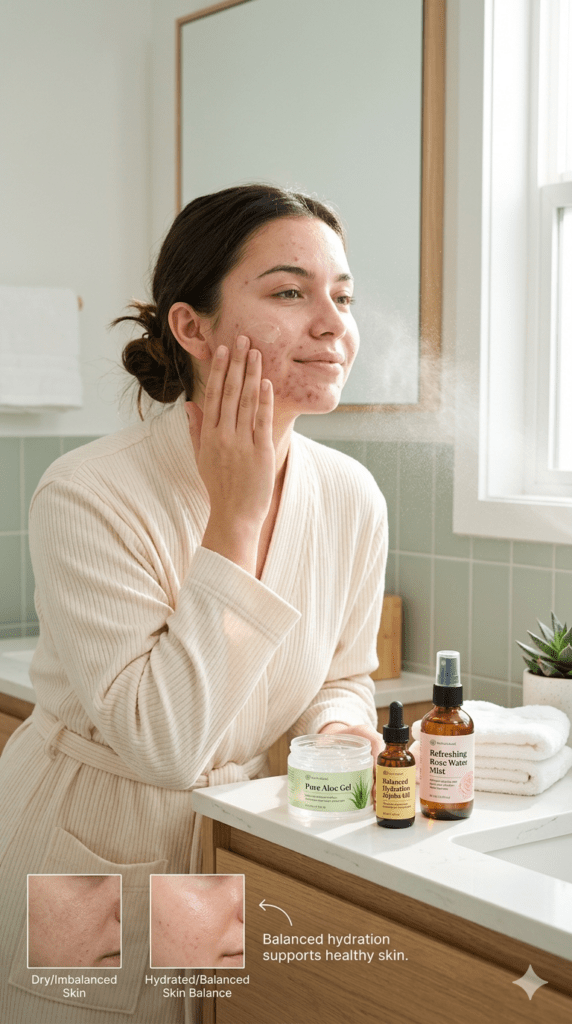
Step 5: Keep Your Skin Hydrated
Many people with acne think they should avoid moisturizer, but that is a mistake. Dry skin can trigger more oil production, leading to more breakouts.
Use lightweight, non-greasy, natural moisturizers like:
- Aloe vera gel
- Jojoba oil (in small amounts)
- Rose water mist
Keeping your skin balanced helps reduce acne over time.
Step 6: Maintain a Healthy Diet
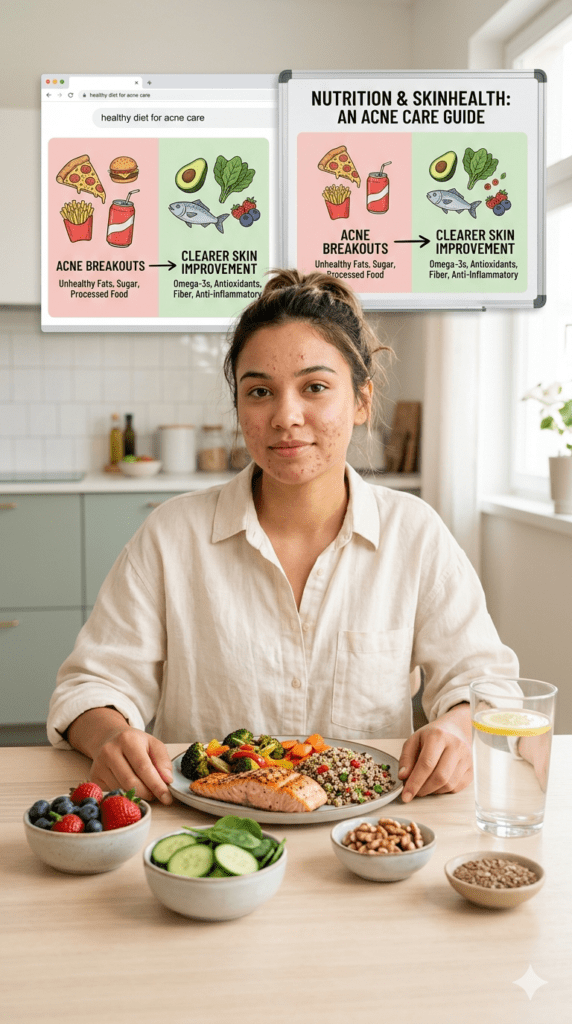
Your diet plays a big role in acne. What you eat directly affects your skin health.
Try to:
- Drink plenty of water (at least 7–8 glasses daily)
- Eat fresh fruits and vegetables
- Include foods rich in omega-3 (like walnuts and flax seeds)
- Avoid oily, fried, and processed foods
- Reduce sugar and dairy if they trigger your acne
A clean diet helps reduce inflammation and improves skin clarity.
Step 7: Avoid Touching Your Face
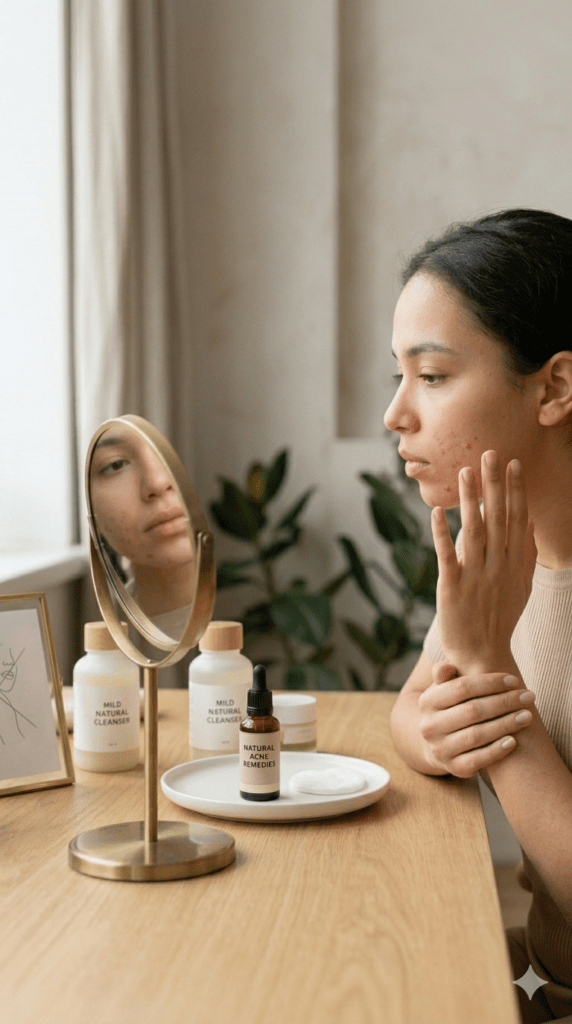
Your hands carry a lot of bacteria and dirt. Touching your face frequently can transfer these bacteria to your skin and worsen acne.
Also avoid popping pimples because it can lead to infection and permanent scars.
Always keep your hands clean and try to resist touching your face unnecessarily.
Step 8: Manage Stress and Sleep Well
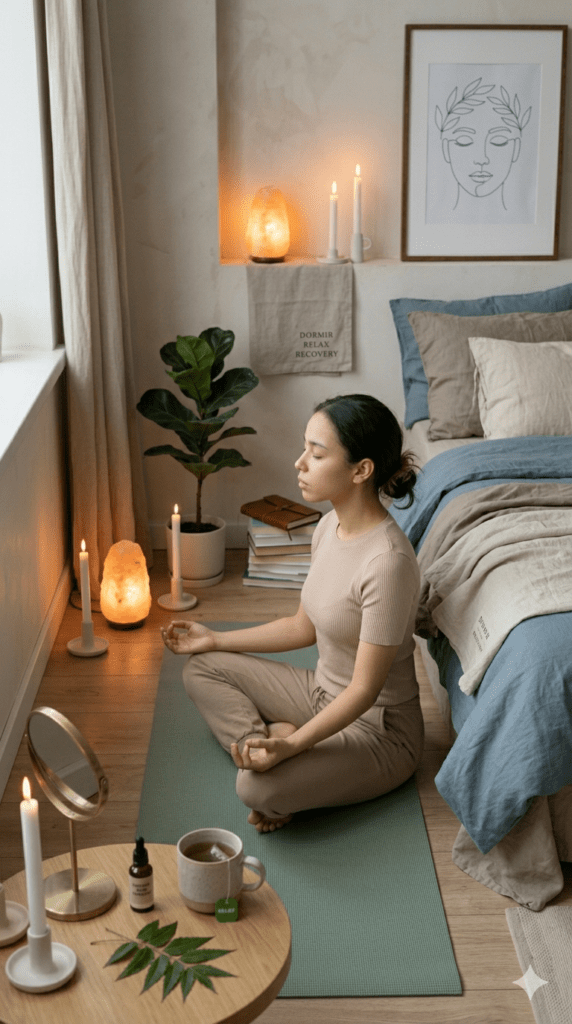
Stress is a hidden cause of acne. When you are stressed, your body produces hormones that increase oil production.
To manage stress:
- Practice meditation or yoga
- Take deep breaths when feeling anxious
- Spend time doing relaxing activities
Also, make sure you sleep for 7–8 hours daily. Good sleep helps your skin repair and heal naturally.
Step 9: Use Natural Face Masks Regularly
You can use simple homemade face masks 2–3 times a week:
- Multani Mitti + Rose Water: Controls oil and tightens pores
- Aloe Vera + Honey Mask: Soothes and heals acne
- Turmeric + Yogurt Mask: Reduces inflammation and brightens skin
Apply for 10–15 minutes, then rinse with lukewarm water.
Step 10: Protect Your Skin from Sun
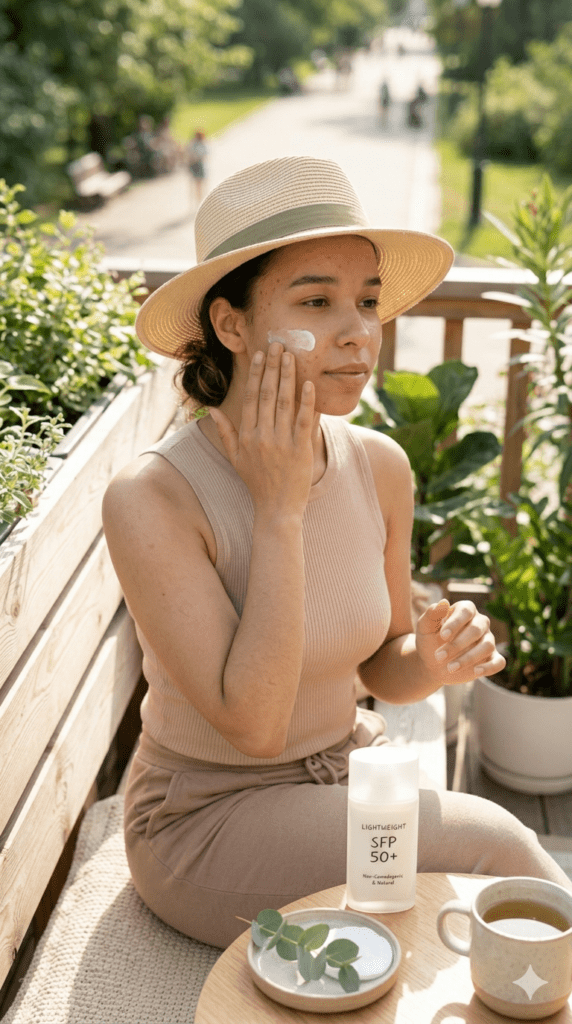
Sun exposure can worsen acne and dark spots. Always use sunscreen even if you are using natural remedies.
Choose a lightweight, non-comedogenic sunscreen suitable for acne-prone skin.
If possible, also use physical protection like hats or scarves when going out in strong sunlight.
Conclusion
Removing acne naturally requires patience, consistency, and a healthy lifestyle. There is no overnight solution, but by following these steps regularly, you can gradually reduce acne, improve skin texture, and achieve clearer, healthier skin. Always remember that every skin type is different, so observe how your skin reacts and adjust your routine accordingly. If acne becomes severe or painful, it is best to consult a dermatologist for proper treatment.
Additional Resources for Acne Care
For more information about acne and skincare, visit these trusted resources:“https://yourwebsite.com/daily-skincare-routine”