Knowing your skin type is one of the most important steps in skincare. When you understand whether your skin is oily, dry, combination, normal, or sensitive, it becomes easier to choose the right face wash, moisturizer, sunscreen, and other skincare products. Using products that do not suit your skin can lead to pimples, irritation, dryness, or excess oil. The good news is that you can identify your skin type at home by following a few simple steps carefully.
Step 1: Clean Your Face Properly
The first step in identifying your skin type is washing your face correctly. Use a mild and gentle face cleanser that does not contain harsh chemicals or strong fragrance. Wash your face with lukewarm water because very hot water can dry out the skin, while cold water may not remove oil properly.
After washing, gently pat your face dry with a soft towel. Do not rub your skin harshly because it can cause irritation. Once your face is clean, avoid applying any skincare products such as moisturizer, serum, toner, sunscreen, or makeup. Your skin needs to stay natural for accurate results.

Step 2: Wait for 30 Minutes to 1 Hour
After cleansing your face, leave it untouched for about 30 minutes to 1 hour. During this waiting period, your skin will return to its natural state. This step is important because freshly washed skin may temporarily feel different from its actual condition.
Avoid touching your face repeatedly while waiting. Also stay away from heavy heat, sweating, or direct sunlight because these factors can affect the results.

Step 3: Observe How Your Skin Feels
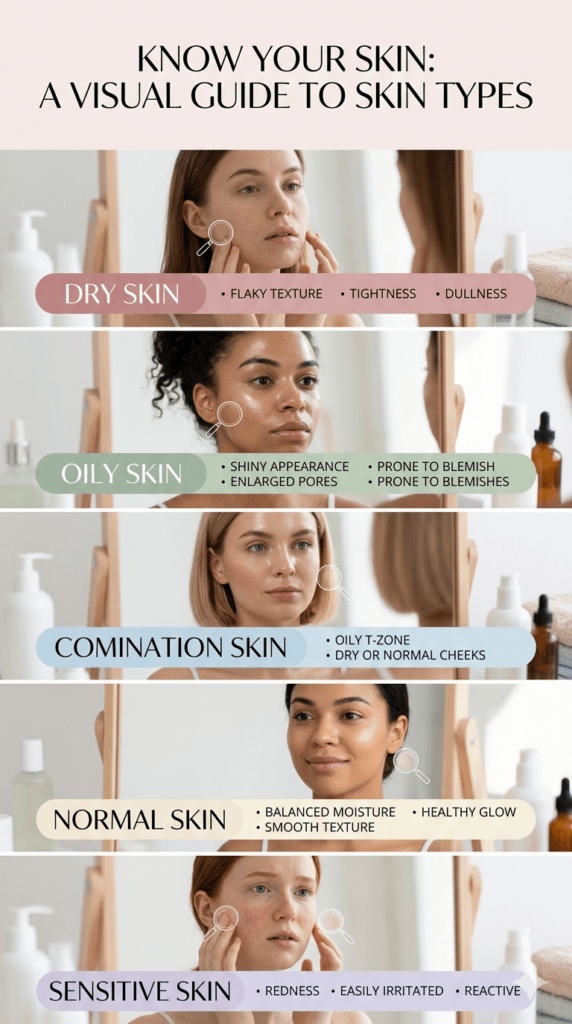
Now carefully look at your face in a mirror and notice how your skin feels.
Dry Skin
If your skin feels tight, rough, flaky, or stretched after washing, you probably have dry skin. You may also notice dullness or small dry patches, especially around the cheeks and mouth area.
Oily Skin
If your forehead, nose, cheeks, or chin appear shiny and greasy, your skin type is likely oily. Oily skin often produces extra sebum, which can lead to acne, blackheads, and enlarged pores.
Combination Skin
If your forehead, nose, and chin (called the T-zone) feel oily while your cheeks remain dry or normal, you most likely have combination skin. This is one of the most common skin types.
Normal Skin
If your skin feels balanced, smooth, soft, and comfortable without excess oil or dryness, you probably have normal skin. Normal skin usually has a healthy and even appearance.
Sensitive Skin
If your skin becomes red, itchy, irritated, or burns easily after using products, you may have sensitive skin. Sensitive skin reacts quickly to environmental changes and harsh ingredients.
Step 4: Use the Blotting Paper Test
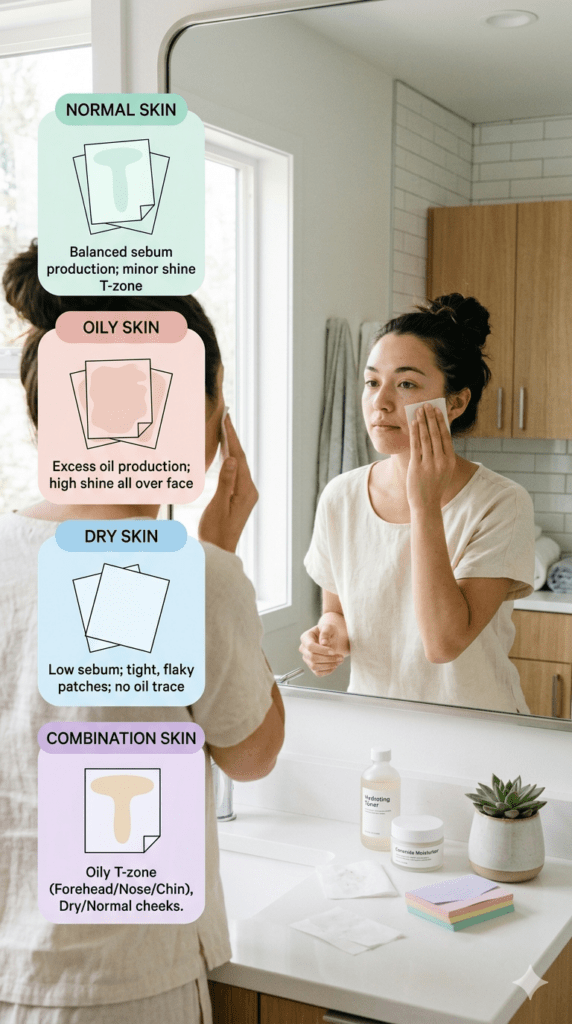
Another easy way to identify your skin type is by using blotting paper or tissue paper.
Take a clean blotting paper and gently press it on different parts of your face such as the forehead, nose, cheeks, and chin.
- If the paper picks up very little oil, you likely have dry skin.
- If the paper absorbs oil from all parts of the face, you probably have oily skin.
- If oil appears mainly from the T-zone area, it indicates combination skin.
- If there is only a small amount of oil and the skin feels healthy, you may have normal skin.
This method is especially useful for understanding how much oil your skin naturally produces.
Step 5: Check Your Pore Size
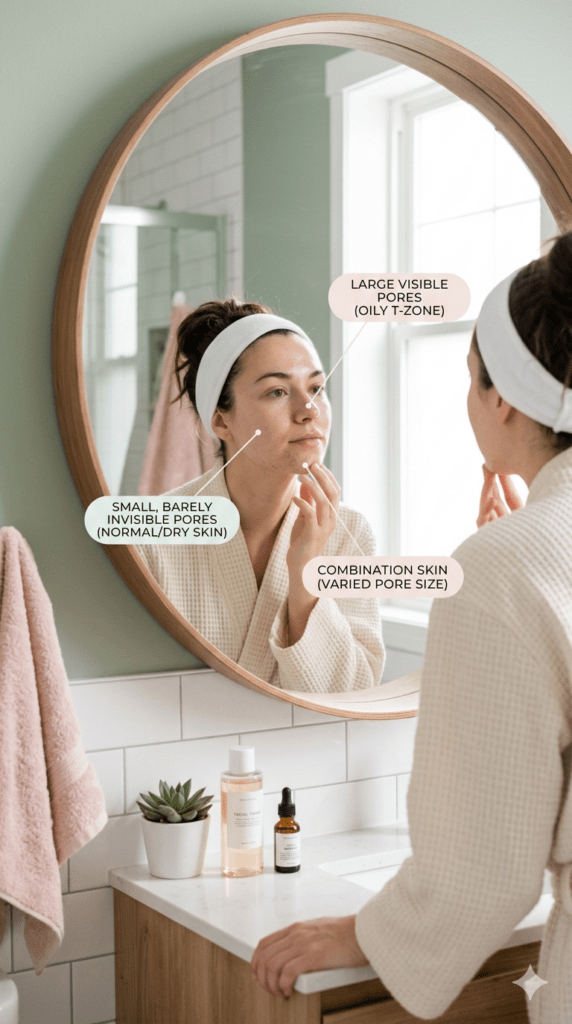
Stand in front of a mirror under bright lighting and observe your pores carefully.
- Large and visible pores are common in oily skin.
- Small or nearly invisible pores usually indicate dry or normal skin.
- Larger pores only around the nose and forehead often suggest combination skin.
Pore size can help confirm the results from the previous steps.
Step 6: Notice How Your Skin Reacts Daily
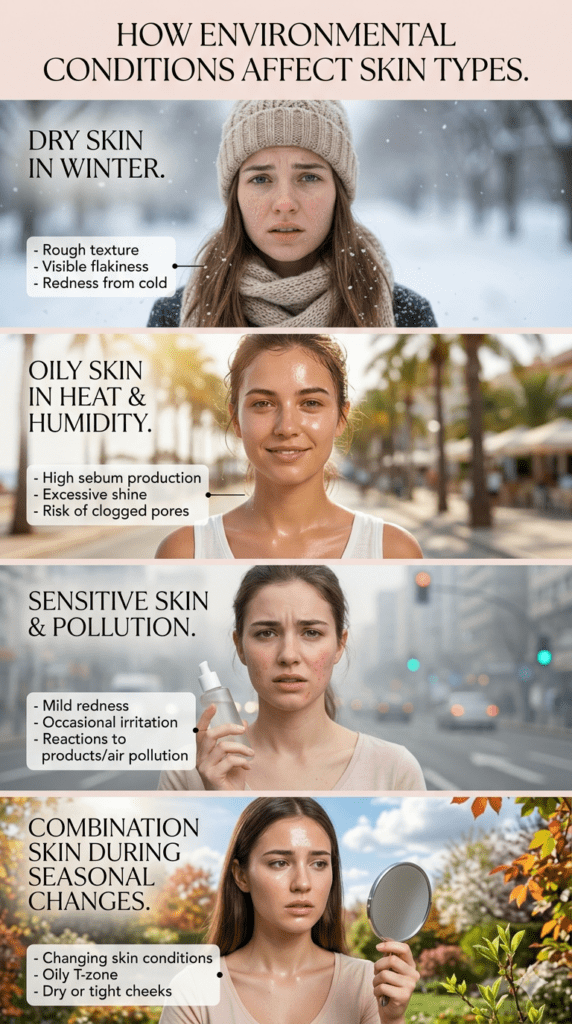
Your skin’s behavior during different situations can also reveal your skin type.
- Dry skin often becomes rough during winter.
- Oily skin usually gets shinier in humid weather.
- Sensitive skin may react strongly to new products or pollution.
- Combination skin may change depending on the season.
Keeping track of these reactions over time helps you understand your skin better.
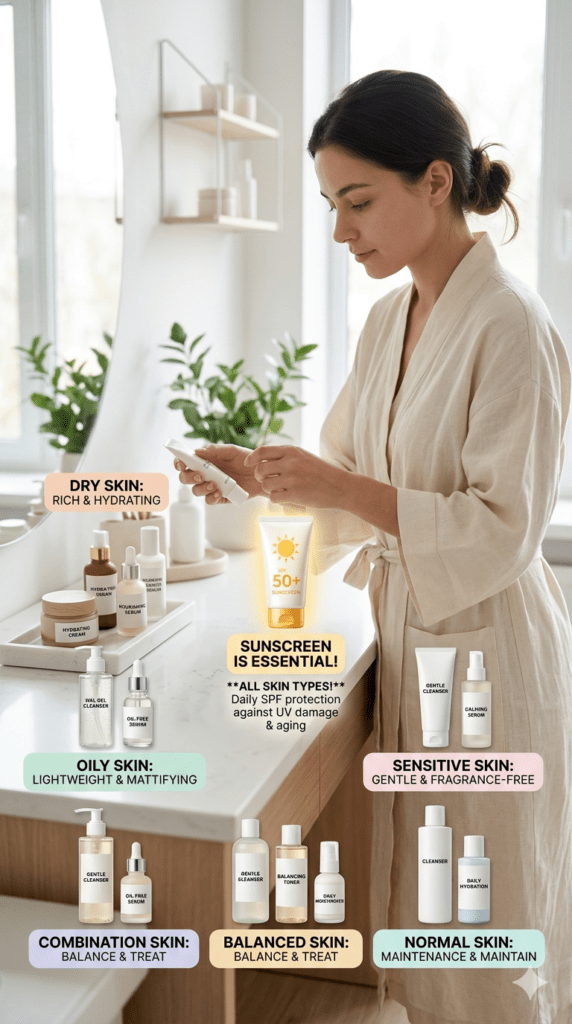
Step 7: Choose Products According to Your Skin Type
Once you identify your skin type, select products specially made for it.
- Dry skin needs hydrating and moisturizing products.
- Oily skin benefits from oil-free and lightweight products.
- Combination skin requires balanced skincare.
- Sensitive skin needs fragrance-free and gentle formulas.
- Normal skin should focus on maintaining healthy balance.
Always use sunscreen daily because every skin type needs protection from harmful UV rays.
Conclusion
https://skincarevibe.com/Identifying your skin type is simple if you follow the correct steps patiently. Start with a clean face, observe oil and dryness levels, use blotting paper, and pay attention to your skin’s natural behavior. Understanding your skin type helps you create an effective skincare routine and keeps your skin healthy, clear, and glowing. If you still feel confused or face severe skin problems, visiting a dermatologist is the best option for professional guidance.https://www.aad.org/public/everyday-care